

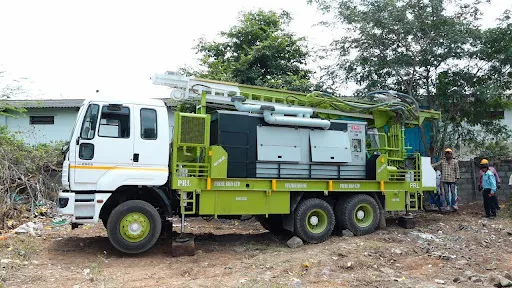
Anyone planning a borehole soon runs into the question of cost. Buyers often start by comparing borehole drilling rig price quotes, but price alone says little about how a machine will perform. Capacity determines how deep, how fast, and how reliably a rig can drill. If it doesn’t match the job, you lose money whether the rig is too small or too large. Here’s how capacity shapes your results.
What “Rig Capacity” Really Means
Capacity isn’t one number. It combines several specifications:
● Depth rating: The maximum depth the rig can reach under normal conditions.
● Hoisting and pull-back force: The power to lift and pull long strings of drill pipe.
● Torque and rotation speed: The turning force available to cut through the formation.
● Air or mud circulation: The compressor or pump output that clears cuttings and cools the bit.
● Hole diameter: The range of borehole sizes the rig can handle.
● Engine power: The energy behind every other function.
These elements work together. A rig with a strong engine but weak circulation, for example, will still struggle.
How Capacity Affects Performance
1. Speed. A rig with enough power and circulation keeps a steady penetration rate. An underpowered unit slows down, especially in hard rock.
2. Depth reach: Pulling and rotating a long drill string takes force. Without it, you may stall before reaching your target depth.
3. Hole quality: Stable rotation and proper pressure help produce straighter, cleaner boreholes. That matters for casing installation and long-term well performance.
4. Wear and reliability: An undersized rig pushed beyond its limits suffers more breakdowns and burns through bits faster.
5. Fuel and logistics: The opposite problem exists too. An oversized rig uses more fuel and may be harder to move onto tight or remote sites.
Match Capacity to the Ground
Geology should guide your choice. Soft soils and sediments need less force than hard, abrasive rock. Down-the-hole and rotary methods suit different formations, so understand your ground before you decide. A site survey or nearby well records can reveal what to expect. Add a modest safety margin for future projects, but avoid paying for capacity you will never use.
Judge Value, Not Just Price
A borehole drilling rig price is only one part of the investment. Compare cost per meter drilled, fuel consumption, maintenance requirements, spare-parts availability, and expected service life. A slightly higher purchase price may offer better value if the rig drills faster, uses fuel efficiently, requires fewer repairs, and delivers dependable performance throughout demanding drilling projects.
Conclusion
Rig capacity drives depth, speed, and reliability, so match it to your formation and project size. Compare total cost, not just the sticker price. Whether you plan to buy a drilling rig in India or elsewhere, choose specifications that suit your geology and your plans for growth. Prime Rigs is a drilling rig manufacturer and exporter headquartered in India, supplying water well, core, and blast hole rigs plus bits, pumps, and accessories to help customers match capacity to ground conditions.